

By: Jessica Park
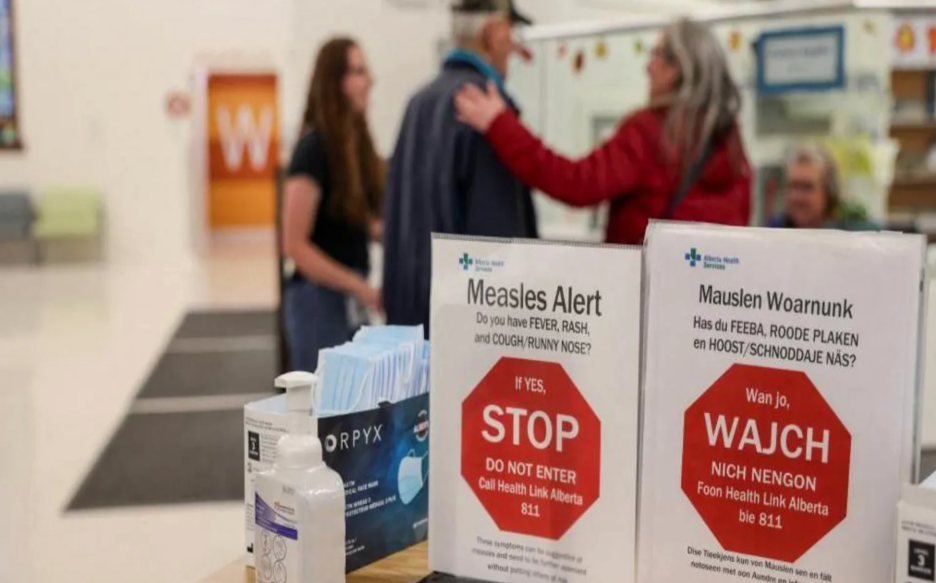
Canada is no longer measles-free because of ongoing outbreaks, as international health experts said on November 10, 2025. The Pan American Health Organization (PAHO) informed the Public Health Agency of Canada that the country no longer holds a measles elimination status, meaning that the entire region of the Americas has lost this categorization.
Health officials say that vaccination rates in Canada have slipped below the 95% coverage rate needed to stop outbreaks. Measles is one of the most contagious viruses in the world and can infect 9 out of 10 unvaccinated people who are exposed. It typically begins with a high fever, followed by a telltale rash that starts on the face and neck. Although most people recover, measles is one of the leading causes of death among young children. Luckily, it can be prevented by a vaccine administered routinely and safely to children. Eliminating measles means stopping the spread and protecting the entire population, especially babies and immunocompromised individuals who cannot be vaccinated.
After a hugely successful vaccination campaign, Canada achieved measles elimination status in 1998, followed by the United States two years later. However, Canada’s vaccination rates have fallen below the 95% rate needed to stop outbreaks. Canada’s outbreak began last October, with health officials attributing it to fewer people being vaccinated against measles. Canada lost its measles elimination status as it lasted 12 consecutive months of transmission.
“It’s a deeply disheartening development. It’s a deeply worrisome development. And, frankly, it’s an embarrassing development,” said a Brown University infectious disease expert. “No country with the amount of resources of Canada—or other countries in North America even—should lose their measles elimination status.”
Similar to Canada, the United States risks losing its measles elimination status if it does not stop an ongoing outbreak by January 2026. “We live in an era of unprecedented human mobility,” an expert warns. “When we had imported cases into those communities, the virus took off like wildfire.”
Earlier this year, a major measles outbreak spread from a largely Mennonite community in Gaines County, West Texas, resulting in more than 1,700 measles cases reported nationwide. Additional outbreaks have been reported in Utah, Arizona, and South Carolina.
Many infectious disease specialists believe that the U.S. is unlikely to avoid Canada’s fate. “I think it’s very likely that we will lose our elimination status, you know, based on the definition of 12 months of endogenous transmission,” said Dr. Andy Pavia, professor and pediatric infectious disease expert at the University of Utah. He added that the U.S. should have done a better job at addressing falling vaccination rates and restoring confidence in immunization.
Health authorities maintain that a 95 percent vaccination rate is key to preventing the spread of measles. However, according to the Centers for Disease Control and Prevention (CDC), the vaccination rate among kindergarteners dropped to 92.5 percent in the 2024-25 school year, putting the U.S. at risk of losing its measles elimination status. We as high school students may encourage friends and family to stay up-to-date on their measles vaccination to help our nation keep measles-free.