

By Darshini Dayanidhi
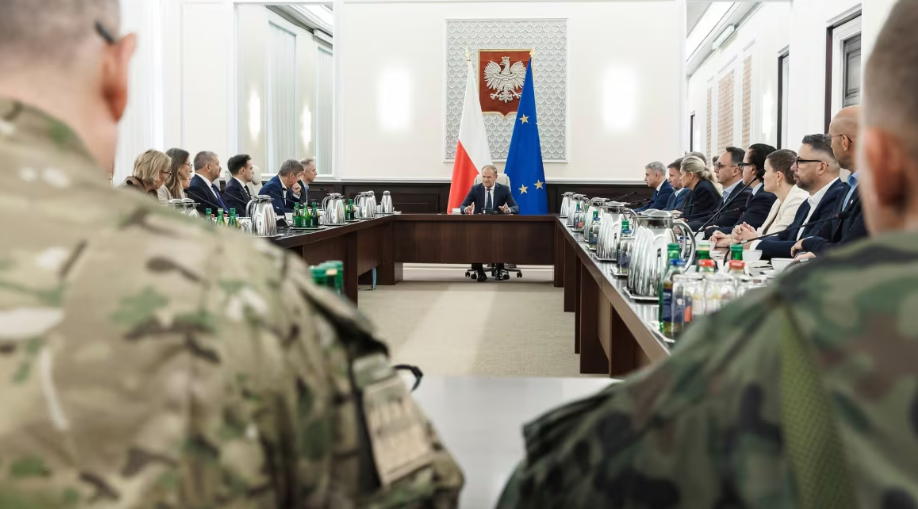
On September 10, 2025, Poland invoked NATO’s Article 4 following a significant breach of its airspace by Russian drones. This incident enhanced the tension and added to the uncertainty in Europe, especially with the ongoing conflict in Ukraine, as NATO allies scrambled to support Poland’s defense.
Article 4 allows NATO members to confer with allies when a member perceives a threat to its territory, political independence, or security. Poland activated the article after multiple Russian-made drones, including Iranian Shahed models, crossed into Polish airspace during a broader Russian drone and missile attack on Ukraine. Some of these drones entered Poland via Belarus, raising concerns about deliberate provocation on Russia’s side.
While Russia denied targeting Poland, NATO and Polish leaders viewed the incursions as intentional threats tied to the Russian war against Ukraine. Belarusian officials claimed some drones went off course due to technical issues. However, the coordinated nature of the strikes seems to suggest Russia’s deliberate testing of NATO’s response.
Polish forces, with support from NATO allies including Dutch and Italian aircraft, shot down several drones. This rapid response not only highlights NATO’s readiness in its responses but also exposes vulnerabilities along its eastern border. Following the incident, NATO launched discussions on increasing air defense and military presence in Eastern Europe. Analysts suggest this could lead to permanent strategic realignments and high defense spending in the region.
Experts interpret the strikes as a calculated move by Russia to challenge NATO’s cohesion and probe the alliance’s defenses and reaction times during emergencies. It is suspected that by deliberately allowing drones to cross into Polish airspace, Russia wanted to take the opportunity to gauge NATO’s readiness to act and its inclination to escalate tensions with or without triggering a full, global military confrontation.
The drone incursion also raises concerns about the security of neighboring countries. Nations along NATO’s eastern border are closely monitoring the situation, aware that even limited, “accidental” violations can quickly intensify to an unimaginable degree.
NATO allies quickly condemned the violation. European leaders and U.S. lawmakers emphasized the need to strengthen Eastern European defenses and continue sanctioning Russia. Russia maintained that it was not responsible for the incursion, calling the accusations unfounded and unjust.
Poland’s invocation of NATO’s Article 4 showcases the fragility of European security amidst the Russia-Ukraine conflict. The alliance’s response understands the importance and need for collective defense. The coming months will reveal how NATO adapts to these new security challenges and whether tensions with Russia will continue to escalate further.