

By Darshini Dayanidhi
Nepal is no stranger to political upheaval. Since the abolition of the monarchy in 2008, the small Himalayan nation has struggled to establish a stable democracy. Governments have risen and fallen with dizzying speed, coalitions have broken apart, and public trust in politicians has eroded with each passing year. Yet even by Nepal’s standards, the recent collapse of Prime Minister K. P. Sharma Oli’s government has shaken the citizens nationwide.
The immediate spark came from a controversial decision to ban dozens of social media platforms. Officials claimed the move was simply regulatory, requiring major tech companies to register with the state, but the public saw something else entirely: censorship. For a generation that communicates, organizes, and often earns its livelihood online, the ban was more than inconvenient. It was a direct attack on freedom of expression. Within hours, the people were in the streets, chanting, posting, and mobilizing in ways the government had not anticipated.
However, the truth is that the Oli administration was already balancing on shaky ground even before the social media ban was announced. Allegations of corruption and nepotism have long tarnished any outward credibility. Questionable deals were made behind closed doors, government funds were siphoned off for personal gain, and the slow establishment of political dynasties fueled an ideology that the democracy in Nepal was committed to serving the elite few and not the many. For the public, facing constant unemployment and the rising costs of inflation, it was the final straw.
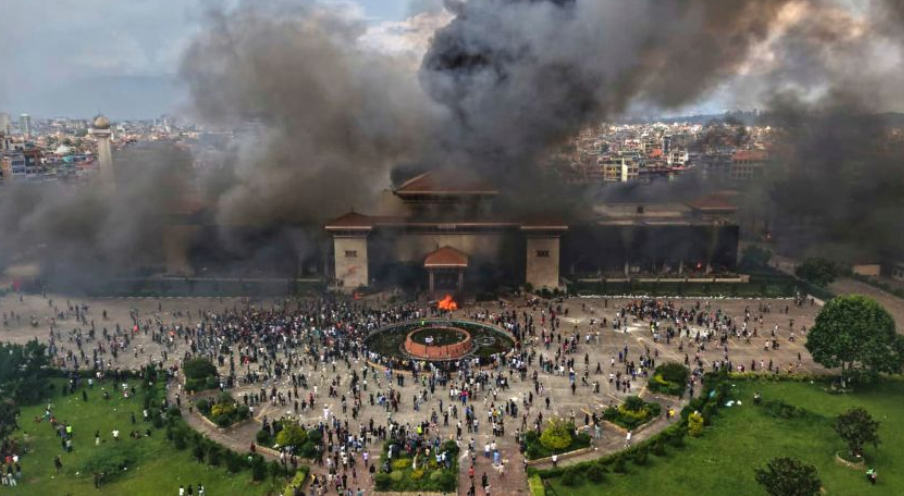
The protests began peacefully, but the government’s heavy-handed response quickly turned public outrage into fury. Security forces clashed with demonstrators, state buildings were attacked, and the death toll on both sides kept mounting. Each casualty inflamed the anger further, convincing many that the government was incapable of listening to the people it was supposed to serve. By early September, Oli resigned under immense pressure, the parliament was dissolved, and the president appointed former Chief Justice Sushila Karki as the head of an interim government. For the first time, Nepal had a woman leading its government. Yet, it was no cause for celebration, as she inherited a country in turmoil.
The effects of this collapse are visible on every level. Politically, Nepal has once again showcased its inability to establish and keep a proper government running in the long term. Coalitions built on personal alliances and gain rather than for the good of the nation continue to leave the people vulnerable. Questions of constitutionality, such as whether dissolving the parliament in this manner was legal, continue to linger in the courts and in public debate.
Economically, protests and blockades disrupted trade routes, cut off much-needed supplies, and sent the already high prices soaring. Daily essentials became harder to find in som e regions, and the uncertainty has rattled investors and allies of the nation alike.
Socially, the protests have reawakened civic energy. Many are calling them Nepal’s first true “Gen Z movement.” The young proved that not only can they mobilize, but that they can also sustain momentum even in the face of unjust violence. They forced their nation’s leaders to confront issues that have long been deliberately buried: inequality, corruption, and the astonishing gap between what the constitution promises and what the citizens actually experience. Yet, alongside this empowerment lies grief; hundreds of families are mourning their loved ones killed in the protests.
Looking forward, the interim government has promised elections on March 5, 2026. The challenge is immense. Citizens want more than just another round of reshuffled unqualified leaders; they want institutions that function the way that they are supposed to, laws that apply equally to the rich and poor, and leaders who are willing to place the public good above the private gain.
Whether Nepal can seize this crisis as a turning point remains to be seen. If handled with transparency and integrity, this collapse could become an opportunity to establish a true democratic government, one that’s focused on serving the people. If mismanaged, it risks becoming just another chapter in Nepal’s long history of instability.