

By: Jessica Park
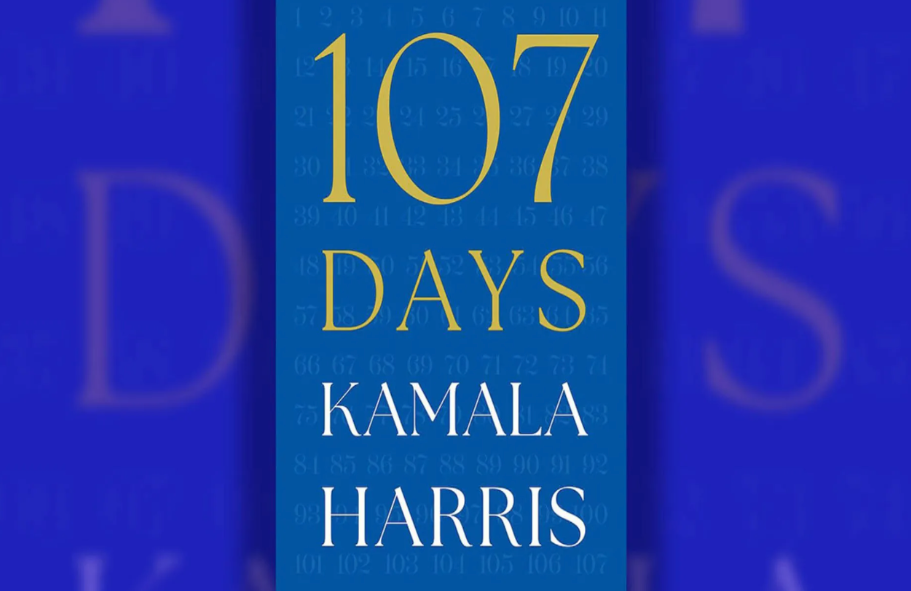
Former Vice President Kamala Harris has returned to the public spotlight with the release of her new memoir, 107 Days. Published on September 23, 2025, the book gives readers insight into her intense 2024 presidential campaign, which began after former President Joe Biden unexpectedly dropped out of the race. Harris’s campaign lasted just 107 days, and the book focuses on that narrow window of time, including Biden handing her the Democratic nomination and her ultimate loss to Donald Trump.
In the book, Harris explains why she believes the short timeframe made it almost impossible for her to win. “I only had 107 days,” she writes, “and that wasn’t enough to lay out my economic vision or to really connect with voters”. The book reads like a daily journal, capturing the non-stop nature of her stressful presidential campaign. Harris reflects on her lack of time to slow down or think deeply, writing, “I tend to be task-oriented and rarely allow myself enough space or time to reflect, and a marathon campaign run at a sprinter’s pace leaves little time for reflection.” While some critics argue that Harris was making excuses for her loss, others see it as an honest account of a difficult, almost impossible situation.
Much of the book covers her jam-packed daily schedule, which Harris described as both surreal and exhausting. She had to introduce herself to the nation and explain what she stood for, while having very little time to do so. The book accounts Harris’s thoughts on choosing a vice presidential candidate, which she reveals was initially Pete Buttigieg, the then U.S. Secretary of Transportation. She ultimately decided against him, landing on Minnesota Governor Tim Walz instead, believing that a woman of color and a gay man would test the limits of American politics.
Another central theme of this book is Harris’ complex relationship with President Joe Biden. While Harris publicly debated current President Donald Trump, behind the scenes she was engaged in a far more complex and confusing battle with her own boss. Harris details a moment when Biden told her that power brokers in Philadelphia refused to support her right before her national debate with Trump, stating that “I just couldn’t understand why he would call me, right now, and make it all about himself.” Even through the disappointment and conflict, Harris asserts the warmth and loyalty she felt toward Biden.
Despite the loss, Harris ends her book on a hopeful note, closing with her belief in a United States that’s less divided, angry, and overall more hopeful than the country she saw in 2024. She writes that “It is not too late for us,” restating her confidence in the American people.
In many ways, 107 Days serves as Harris’ attempt to set the record straight. She pushes back against the misinformation that she believes hurt her campaign, but more than just that, Harris focuses on her core messages and beliefs. Whether or not she runs for office again, 107 Days provides an authentic perspective on the process of leading a presidential campaign and the immense pressure that comes with it.