

By Julie Li
Intro
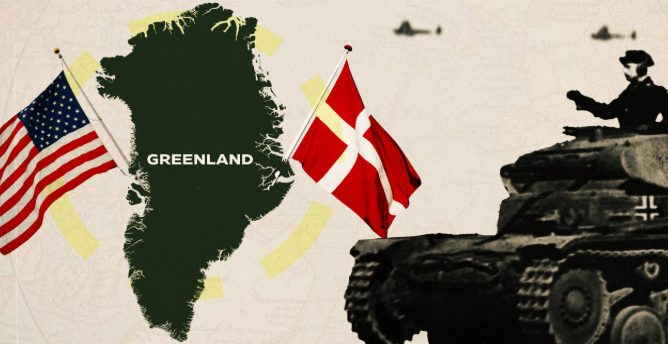
As many people have heard, President Donald Trump has made it quite clear that he wants to acquire Greenland, a desire which has intensified in recent weeks.
This idea goes from his first term in office until today. Trump has said, “[we will] do something on Greenland whether they like it or not” and that “[using] the military is always an option”.
Why Greenland matters
Greenland lies off the East Coast of Canada and is the largest island in the world. It lies in a strategically important spot between North America and Europe.
Due to climate change, arctic ice has begun to melt, making sea routes and access to resources more available. This draws the attention of major powers.
Greenland is also home to a key U.S. military installation, Pituffik Space Base. Although Greenland governs many of its internal affairs, it is part of the Kingdom of Denmark.
Why Trump wants Greenland
Trump wants Greenland for three main reasons: resources, defense, and fear of another country controlling Greenland.
Trump recently wrote in a post on Truth Social, “the United States needs Greenland for the purpose of National Security. It is vital for the Golden Dome that we are building. NATO should be leading the way for us to get it.” Here he talks about how Greenland will play an important role in the US’s defensive systems.
Trump has argued, “If we don’t, Russia or China will, and that is not going to happen,” Trump said in a social media post, “Militarily, without the vast power of the United States, much of which I built during my first term, and am now bringing to a new and even higher level, NATO would not be an effective force or deterrent. They know that, and so do I.” He also wants to acquire Greenland due to its rare earth metals.
Europe’s (also the EU and NATO– basically Europe) response
As Trump proactively talks about his want to acquire Greenland, EU leaders are scrambling to come up with a deal to allow Trump to be happy while not destroying the alliance that holds together European security.
One response is a NATO solution. Several policy analysts describe Europe’s approach as offering “everything but territory” which includes ideas like more security cooperation, more NATO presence, and more investment, showing a “line” around ownership and sovereignty.
Another response is expanding military exercises with allies. Denmark’s defense ministry announced that “in and around Greenland” NATO partners will bring more aircraft, vessels, and soldiers into joint activity. The stated goal is training and readiness in the Arctic and north atlantic at a moment when tensions have spread northward.
One final (but note that this isn’t the only option) response is Europe’s broad diplomatic support for Greenland’s sovereignty. European institutions have signaled that Greenland’s territorial integrity is not a bargaining chip. The European Parliament scheduled debates on supporting Greenland’s sovereignty and discussing the EU response to U.S. claims.
How Greenland’s People are Reacting
Reports describe protests in Nuuk and Denmark opposing any attempt to force the transfer of Greenland. For many Greenlanders, this issue is not about Denmark vs. the U.S., but about Greenland’s right to decide its own future without outside powers treating the island like a prize.
Conclusion
Whatever happens next will depend on whether this argument stays at the level of rhetoric and negotiation or escalates into deeper political conflict. But the core issue is clear: Greenland’s strategic location has made it a headline over time. And Denmark and its allies are trying to protect both Arctic security and Greenland’s right to decide its own future.