

By: Snigdha Chakravarti
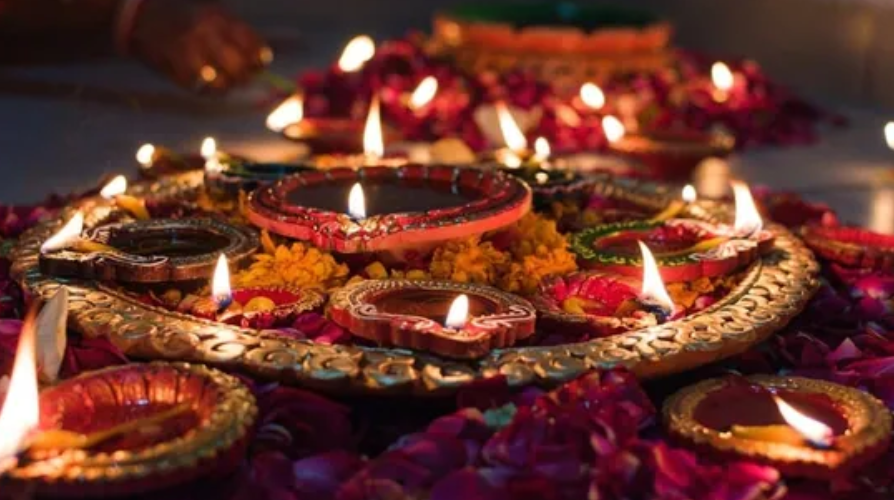
Saturday, October 18th marked the first day of one of the most important festivals in India: Diwali. Diwali means “row of lights,” both literally and symbolically. People light oil lamps called diyas outside their homes, but the lights also signify the victory of good over evil, light over darkness, and knowledge over ignorance. Junior Darshini Dayanidhi remarked that for her, Diwali is a time for “fresh starts and good energy by welcoming new light and luck.” This is also the reason why many people start new ventures at this auspicious time of the year, especially in finance and business. Darshini, moreover, said how she really enjoys being around the people she loves and is “excited to have off from school for Diwali this year.” Similarly, junior Shivika Mangaraj found that this festival allows her to “connect with cultures and traditions while celebrating with family.”
Although school was off on October 20th, there are 4 other days of Diwali, with October 20th being the main day of the festival. The first day is called “Dhanteras,” where people pray to the god of medicine and health, Dhanvantri. Spiritually, it’s a day for spiritual cleansing and renewal, where people pray to Lord Dhanvantri and Goddess Lakshmi, the bringer of wealth, for wellness and prosperity. On this day, houses are cleaned, lights are put up, and household items are bought for good luck. The second day is called “Naraka Chaturdasi,” which marks the day Lord Krishna, an incarnation of Lord Vishnu (the god of preservation and protection), kills the demon Narakasura. Traditionally, an oil bath is taken in the early morning, cleansing one of their sins in the past year. The third day is the main day of the festival and is called “Lakshmi Pooja.” People pray to Lakshmi, the goddess of wealth and prosperity, to seek good fortune for the coming year. The fourth day is called “Govardhan Pooja,” where people express gratitude for divine protection and nature by offering 56 varieties of food. The 56 varieties of food are collectively known as “Chhapan Bhog.” The last day of Diwali is “Bhai Dooj”; this celebrates the everlasting bond and love between brother and sister. The sister prays for her brother’s well-being, while the brother pledges to protect his sister. Gifts and sweets are exchanged between siblings as well.
The most iconic part of Diwali is, inarguably, the sweets. From barfi (buttery, sugar fudge) and kaju kathri (cashew fudge) to ladoos (sweet balls) and jelabi (syrupy, fried dough), countless delicacies are made on this special occasion to be both enjoyed and shared with family and friends. Savory, fried snacks are also made, including murukku (spiral-shaped rice snack) and chivda (mixture consisting of flattened rice, nuts, and other items).
Diwali is a time to spend time with family and friends to celebrate good luck and prosperity. However, it’s also a pious time dedicated to prayer and reflection that ties back to the main symbol of this festival: the triumph of light over darkness.