

By Shivm Mehta
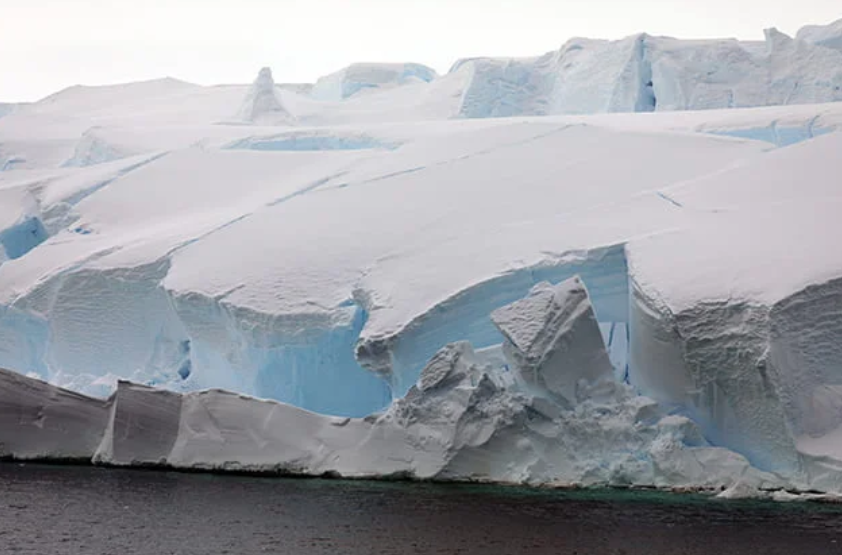
Scientists earlier this year made an expedition to Antarctica and studied the Thwaites Glacier, an enormous glacier discovered in the 1940s and dubbed the “doomsday glacier” by many scientific outlets. The results of their experiments should scare us all, and serve as a constant reminder of the consequences of our changing global climate.
Currently, the glacier is losing approximately 50 billion net tons of snowfall annually. If it breaks apart fully, scientists warn that global sea levels could rise by over two feet. Obviously, this would endanger coastal cities across the globe, affecting tens of millions directly. High endangered cities include Bangkok, Shanghai, Kolkata, Tokyo, Lagos, and New Orleans.
However, that would only be the beginning. As the glacier melts, further global warming will continue to cause ice in Greenland to melt and cause oceans to expand in volume. Thwaites Glacier also acts as a barrier for many surrounding Antarctic glaciers on land. If Thwaites were to fall, a chain reaction would cause all these glaciers to follow its path.
Richard Alley, a geosciences professor at Penn State warns that the whole West Antarctic could fall if we don’t find a solution to the melting of the Thwaites.
Furthermore, non-coastal cities should also be equally concerned with these developments. High storm surges and increased flooding would cause high stress and costs to all major cities across the globe. For example, some predictions estimate that protecting NYC could cost upwards of $52 billion alone. Third-world countries would not be able to pay such exorbitant amounts, and many cities would fall as a result.
Unfortunately, under President Trump, the US has abandoned research that could give us better forecasts and simulations of the rate of Antarctica’s ice melting, and its resulting consequences. Furthermore, President Trump has promoted the use of fossil fuels, adding to the greenhouse gas emissions that are causing the dangerous spiral of global warming. This would only speed up the rate at which our glaciers fall.
Our most prominent cities were largely built on or near bodies of water, for obvious reasons. These same bodies could prove to be the doom for many of these cities. If we don’t find a way to prevent this cycle of ocean levels rising, who knows what the future of all our cities will look like? Will we all have to move to Kansas City?