

By: Joyce Li
These days, everything is about protein. Here, take a bite of these Quest Protein chips! Or make some cottage cheese strawberry clusters for a sweet treat that’s also “high in protein.” And if you’re feeling hungry for an actual meal, swap out your regular penne for some protein pasta for a “healthier” alternative! There hasn’t been this much buzz around so-called “protein-maxxing” since the days of the keto diet. Yet scientists are saying that people should be paying more attention to their consumption of another macromolecule: fiber.
Fiber is a type of carbohydrate, long chains of sugars that form polysaccharides such as the starches in your protein pasta. However, what differentiates fiber from your normal carbs is what the body does with it: humans lack the necessary digestive enzymes to break fiber down into its building blocks, something that we don’t have trouble with when it comes to other polysaccharides. Now it might seem counterintuitive to suggest adding more fiber into your diet: after all, what’s the point of eating something if you’re not getting nutrients from it? By the sounds of it, eating fiber seems just as beneficial as chewing on wood chips. However, it’s exactly the indigestibility that makes fiber so valuable: since it is unable to be processed, it helps with the formation of stool, and also makes it easier to pass through your intestines, lowering the amount of stress your colon cells have to go through. Indeed, increasing fiber intake has been shown to decrease colorectal cancer rates. Having more fiber in your diet also links to less risk of heart disease, lower cholesterol levels, and lessening inflammation. These benefits only come with meeting your daily fiber requirements, though: and that’s what’s got scientists so pressed.
In a study conducted in 2016, it was discovered that only 5% of Americans are getting enough fiber into their diet each day. FIVE PERCENT! That means 95% of people in the United States are beelining towards a future full of preventable health consequences. Researchers say that the issue with America’s fiber crisis is that many people are unaware of the issue, or don’t quite know what foods are good sources of fiber.
In the Omnibus Survey, two thirds (66%) of respondents identified as “making an effort to add fibers to their diets,” saying a reason to eat more whole grains was “to get more fiber.” 85% of respondents expect products labeled “whole grain ingredients” or “made from whole grains” to be good or excellent sources of fiber. In addition, nearly 8 of out 10 (78%) of all respondents agreed that foods made from whole grains are one of the best sources of fiber, and 7 out of 10 (69%) rely on foods made with whole grains for their daily fiber needs.”
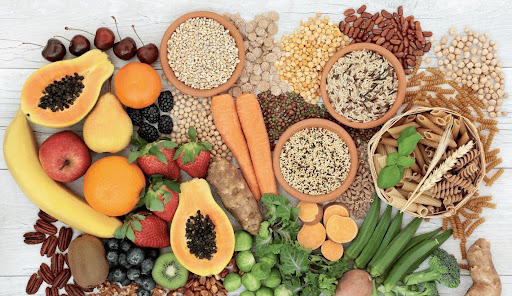
Despite what people say, ‘whole grains’ are not necessarily considered a high-fiber food. They will be richer in fiber than processed grains, but that number depends largely on the type of grain you’re consuming. For example, 100g of barley will get you around 17.3g of fiber, while that same amount of brown rice will only contain about 3.4g. Therefore, the easiest way to solve the national “fiber crisis” is to popularise the education of the public on what fiber rich foods look like, and nowadays, the most accessible way to begin this education is through social media. Thus, when you’re scrolling on Instagram, instead of getting another reel about 26g protein tortillas, maybe you’ll start seeing reels of people eating 26g fiber tortillas. Instead of protein-maxing, let’s start fiber-maxing.