

By Kateryna Polyak
Students across France have taken to the streets to protest against current conditions in their schools, including overcrowded classrooms, teacher shortages, damaged buildings, leaking roofs, uncomfortable temperatures, aging buildings, and more. The demonstrations have led to clashes with police, arrests, and disruptions to classes. Beginning around Paris in September, the protests have developed into a national issue as students call on the government to address these problems.
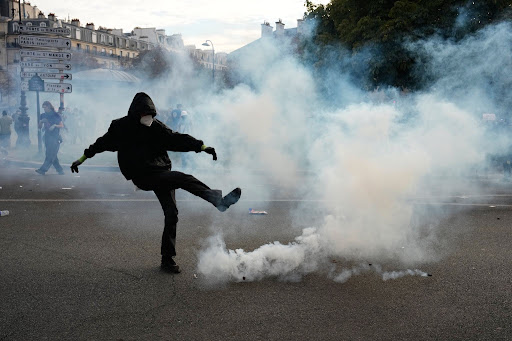
On October 6, demonstrations took place in several parts of France, including the capital, Paris. According to figures from France’s Interior Ministry, approximately 266,000 people took part in demonstrations across the country that day, including around 56,000 in Paris. Police used tear gas and water cannons to control crowds in French cities, resulting in 500 people being detained in a single day during a massive national day of action. President Emmanuel Macron’s government is under additional pressure to respond to the concerns being raised by students because of these massive protests and public frustration over education funding and the condition of public schools.
Students claim that their schools lack needed resources, causing problems like overcrowded classrooms, not enough teachers, damaged school buildings, leaking roofs, classrooms that become uncomfortably hot, and unexpected issues with rat infestations and maintenance, which some schools have also reportedly dealt with. When there are not enough teachers, classes may be disrupted, and students may have fewer opportunities to receive individual help. Poorly maintained buildings can also make it more difficult for students and teachers to work comfortably, affecting students’ daily school experiences. For many protesters, the demonstrations are a way to draw attention to problems they believe have not received enough attention from the authorities.
During the protests, some students have blocked entrances to school buildings using garbage bins, bicycles, and other objects, which have interrupted lessons and prevented some students and staff from entering school normally. Hélène Boucher High School in Paris became a focus of the demonstrations, where protests around the school reflected the wider movement, with students making their demands more visible. As the demonstrations continued, the situation became more tense in some locations, since some protests were accompanied by disorder, property damage, fires, or objects being thrown, which led to confrontations between demonstrators and police officers.
The movement has received support from parents, teachers, and university students, who have joined demonstrations in several cities. According to The Associated Press, “We need to listen to them,” said Léa Monimart, an adult demonstrator in Lille. She also added that young people understand the problems they are facing and deserve to have their concerns taken seriously.
On October 6, police used tear gas, water cannons, and other crowd-control measures during some demonstrations, they later explained that they were responding to disorder and trying to control the crowds during the chaos. However, this use of force has raised concerns among some parents, students, and rights advocates, who have questioned whether the police response in certain situations was excessive. Reports described serious injuries connected to the unrest. According to French media reports, a 15-year-old lost a hand on October 5 in Lens, northern France, after an incident involving a police dispersal grenade. This incident showed the risks young people faced during the confrontations. Interior Minister Laurent Nuñez defended the police response, saying that the use of force had been proportionate in almost all cases, at the same time, the protests have prompted questions about how authorities should respond when demonstrations involving large numbers of young people become disorderly. French officials have also expressed concern that people who are not part of the original student movement may be contributing to the unrest, since this has created another challenge for authorities trying to distinguish peaceful demonstrations from incidents involving violence or property damage.
The government later acknowledged that the students’ concerns need to be addressed. Prime Minister Sébastien Lecornu has asked ministers to develop proposals related to issues including teacher shortages and the condition of school buildings. The Education Ministry has also introduced an online portal that allows students to submit complaints anonymously, which provides students with another way to report problems in their schools without having to publicly identify themselves. However, the government’s response comes at a time when public spending and budget pressures are also important issues, which means that improving school buildings, hiring more teachers, and providing additional resources require funding and planning. It remains uncertain how quickly the government will be able to make changes or whether the measures it proposes will satisfy the protesters. According to France’s Education Ministry, classes were suspended at 891high schools partially or fully on October 6, which disrupted normal school activities for students and teachers, including people who are not participating in the protests.
In France, the immediate question is whether the government can address students’ concerns while restoring normal school activities and preventing further confrontations. The response could involve changes to school facilities, staffing, or the way students can report problems. Whether the government’s proposals will lead to noticeable changes in schools remains uncertain, and the next steps will depend on the actions taken by officials, the resources made available to schools, and how the protests develop in the coming weeks.